
They Beat Back the Tariffs
Small business owners played a major role in the tariff battle


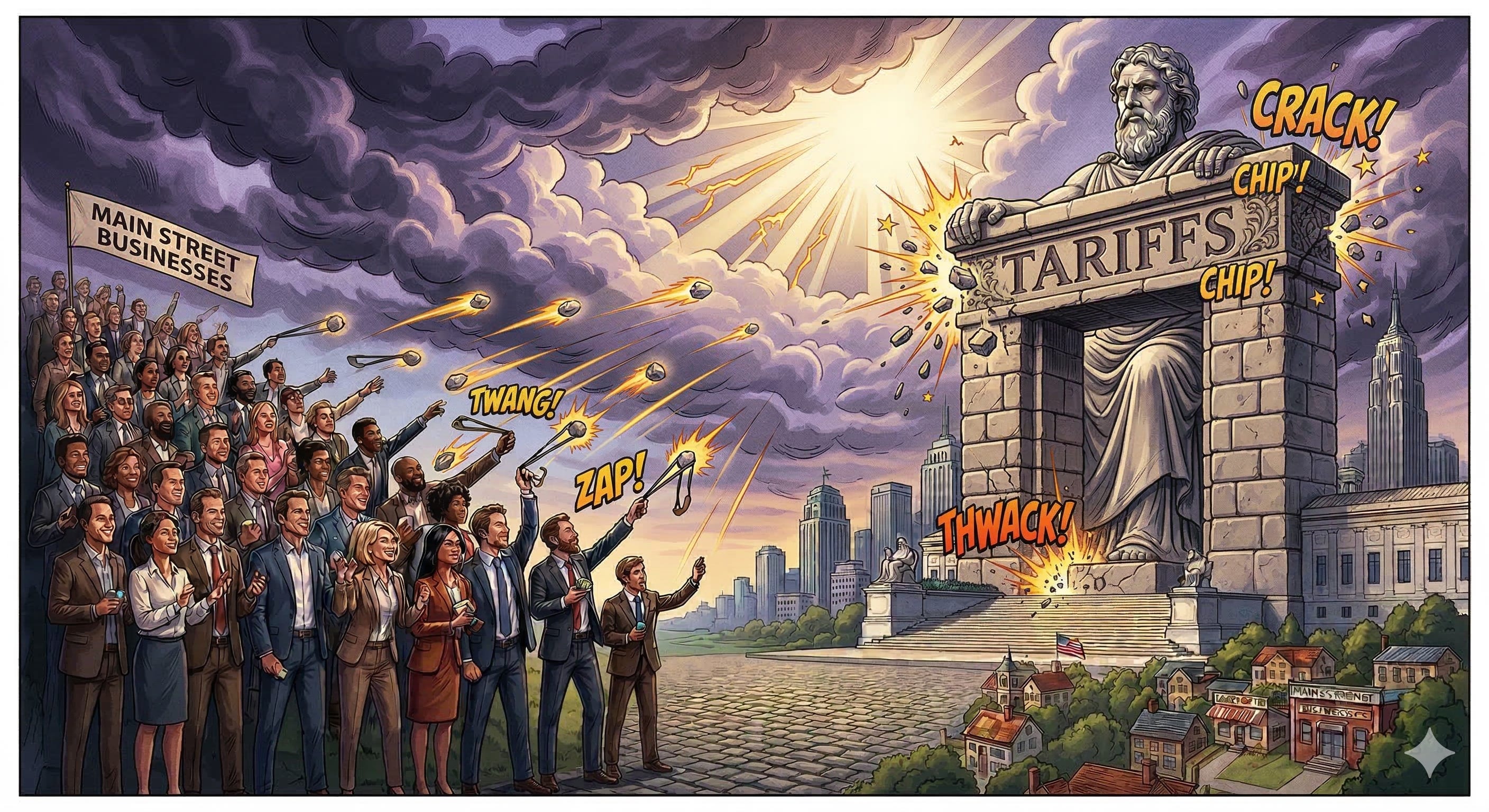
On February 20th, the Supreme Court ruled that the Trump administration’s Liberation Day tariffs were unconstitutional. This decision made headlines across the world, as a key pillar of the administration’s economic policies collapsed.
Many have written about what this decision teaches us about the limits of executive power. But it also offers a lesson about the omnipresence and omnipotence of Main Street Millionaires.
The plaintiffs in the case were business owners who paid the tariffs. From the two separate cases that merged there were seven businesses involved (two owned by the same family). Let’s learn about them. Like how we ranked the NFL owners in the playoffs (Silicon Valley won the Super Bowl this year), we’ll also give them a Main Street Millionaire score (MSMS).
The Plaintiffs
Atop the list are Learning Resources Inc and hand2mind (MSMS = 10). Based in suburban Chicago, they make educational toys. The combined business has around 500 employees, reported a combined revenue of $250 million, and remains closely held by the Woldenberg family. hand2mind markets directly to school districts, whereas Learning Resources targets consumers. Circana ranked them as the 25th largest U.S. toy company.
This is a very large family business, off the radar yet its products are everywhere. There are four generations working in the business. And the family’s combined net worth could well put them into centimillionaire status.

Next up is Terry Precision Cycling LLC (MSMS = 9). Located in Burlington, Vermont, the company sells women’s cycling apparel and gear. Georgena Terry founded the company in 1985 in Rochester, New York, after recognizing that standard bike frames were designed for male proportions. She built custom frames in her garage and grew the business into the leading women-specific cycling brand through the 1990s. Liz Robert bought the business from Terry in 2009 and retired as CEO/owner in 2024 after selling the company to Flagg Bicycle Group, another MSM business.
We love this story. To develop her early prototypes, Terry drew on her background as a mechanical engineer trained at Georgia Tech. And while MSMs have historically been disproportionately men, we meet several amazing female founders like Terry in our book. The story also shows what can happen to a business when MSMs retire but manage to find a natural successor to take over.
Up next is FishUSA (MSMS = 8), an online fishing tackle retailer founded in a garage in 2000, based in Fairview, Pennsylvania, near the “steelhead alley” in Lake Erie. The company has 37 employees and reported in proceedings just under $10 million in revenues in 2025. Dan Pastore was a lawyer who switched to internet startups in the mid-90s. He started FishUSA in 2000 while in his early 40s.
We give this an 8, because the story of the business and founder background both fit the bill. While a business this size would be at the lower end of the net worth spectrum for MSMs, Pastore is likely living quite comfortably. And he generated enough visibility to mount an unsuccessful bid for Congress in 2022. The intersection between MSMs and elected office is another big storyline in the book; Pastore lost to Mike Kelly, an auto dealer!
VOS Selections (MSMS = 6) is a fun one, a wine importer and distributor, owned and operated by founder Victor Owen Schwartz, in midtown Manhattan. Schwartz was an econ major at Cornell and pivoted from a career in commercial banking to wine distribution in his late 20s. When starting the business, he moved to France to build relationships with small, artisanal, family-owned producers, which form the core of their business. His daughter Chloe runs the company alongside him.
We give this one a 6. Depending on margins, the business might not be quite large enough to qualify as MSM. But the industry and background fit the profile of many alcohol distributors we meet in the book.
Then there’s MicroKits LLC (MSMS = 3). Based near Charlottesville, Virginia, David Levi makes educational electronics kits for children. He started the business in 2020 to encourage children’s interest in hands-on engineering.
David is not a MSM…yet. But he could be on his way. We meet several characters whose early career resemble David’s in our book.
Lastly, we have Plastic Services & Products LLC (d/b/a Genova Pipe) (MSMS = 1). They manufacture and sell chlorinated PVC and ABS pipes and fittings for plumbing. The original company, Genova Products, manufactured plumbing and rainwater products and was founded in 1960 in Davison, Michigan. Genova was acquired out of financial distress in the pandemic by Plastic Services and Products and appears to have financial owners (e.g., private equity).
This gets a 1 because, while the nature of the business is very Main Street, its ownership does not appear to be so and hasn’t been for a while.
The Army Behind Them
The plaintiffs in these cases were drawn from a pool of 301 thousand businesses that paid the tariffs. Attached to the cases at the Supreme Court was an amicus brief that collected testimonials from 30 more companies and signatures from more than 700 small businesses across the country, including an importer of hand-painted Chinese wallpaper from New York City; a guitar effects pedal maker from Akron, OH; a bag company from Fairfax, Virginia; and a design company from Montana.
Why weren’t the huge retailers like Walmart and Home Depot at the center of these cases? In part, the answer is the enduring popularity of small businesses in American culture. Lawyers chose these plaintiffs to bring cases that would appeal to judges both on substance and emotionally.
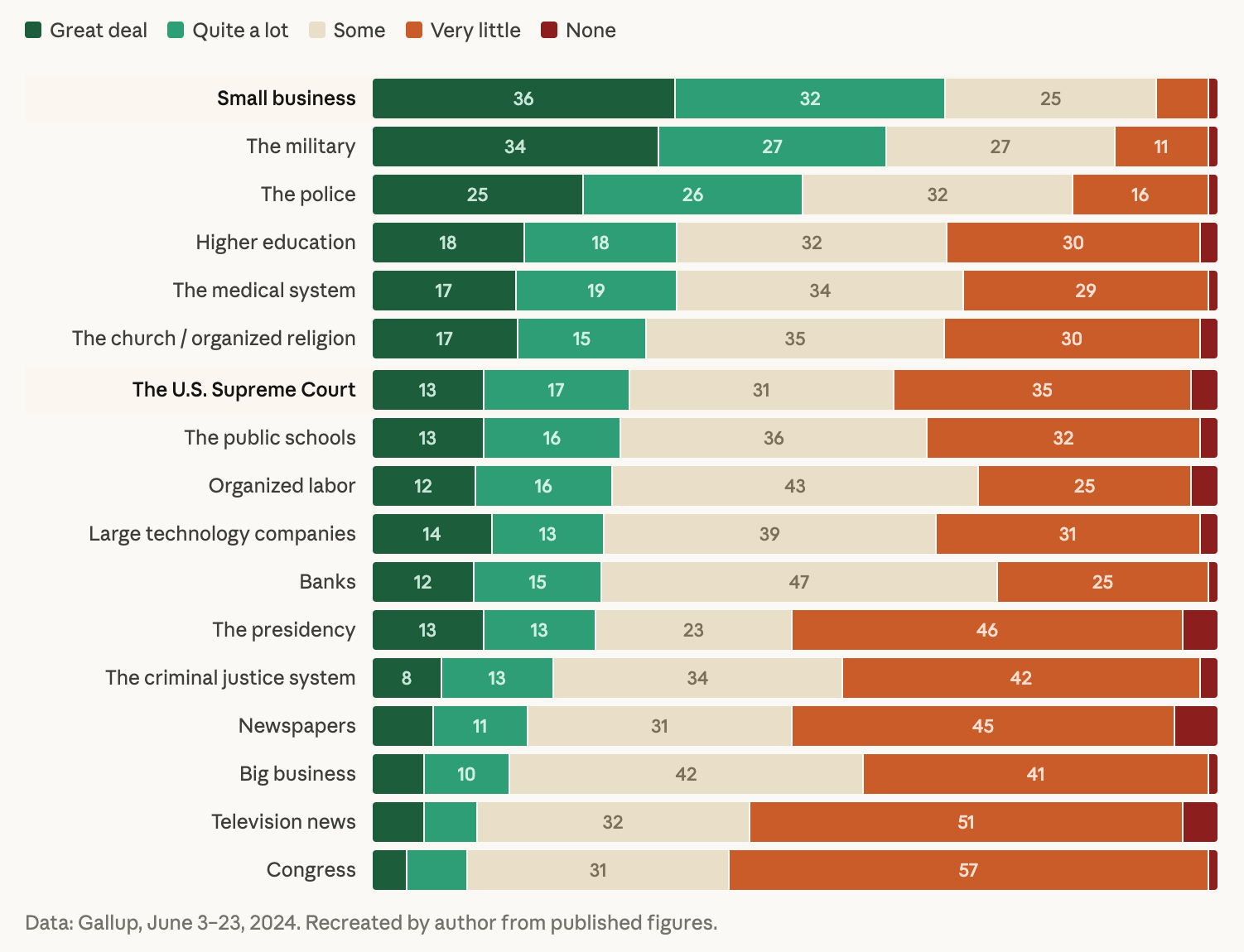
Relative to the faceless mega corporation, American small business owners present compelling human stories from all parts of the country and many walks of life. Main Street Millionaires can harness this popularity to win policy victories, in these cases for consumers, but in many other cases for themselves.
In our book, we explore the origins of their power and its effects on the economy today. Read it and you will no longer be surprised to find them as central players in the policy battles that lie ahead, whether it’s the fight to force the Treasury to refund tariffs already paid or the fight against income, wealth, and estate taxes on business owners.